Machine Learning Algorithms
Machine learning algorithms are computational models that allow computers to understand patterns and forecast or make judgments based on data without the need for explicit programming. These algorithms form the foundation of modern artificial intelligence and are used in a wide range of applications, including image and speech recognition, natural language processing, recommendation systems, fraud detection, autonomous cars etc.
.webp)
This Machine learning Algorithms article will cover all the essential algorithms of machine learning like Support vector machine, decision-making, logistics regression, naive bayees classifier, random forest, k-mean clustering, reinforcement learning, vector, hierarchical clustering, xgboost, adaboost, logistics, etc.
Types of Machine Learning Algorithms
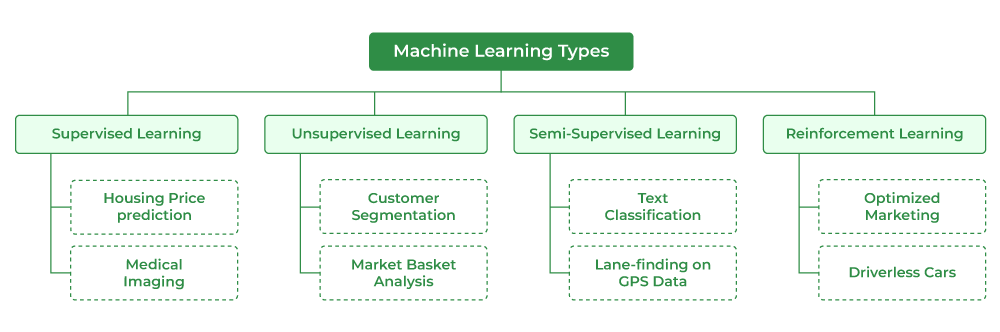
There are three types of machine learning algorithms.
- Supervised Learning
- Unsupervised Learning
- Reinforcement Learning
1. Supervised Learning Algorithm
Supervised learning is a type of machine learning algorithms where we used labeled dataset to train the model or algorithms. The goal of the algorithm is to learn a mapping from the input data to the output labels, allowing it to make predictions or classifications on new, unseen data.
2. Unsupervised Learning Algorithm
Unsupervised Learning is a type of machine learning algorithms where the algorithms are used to find the patterns, structure or relationship within a dataset using unlabled dataset. It explores the data’s inherent structure without predefined categories or labels.
|
Unsupervised Machine Learning Algorithms |
|---|
|
3. Reinforcement Learning
Reinforcement Learning is a type of machine learning algorithms where an agent learns to make successive decisions by interacting with its surroundings. The agent receives the feedback in the form of incentives or punishments based on its actions. The agent’s purpose is to discover optimal tactics that maximize cumulative rewards over time through trial and error. Reinforcement learning is frequently employed in scenarios in which the agent must learn how to navigate an environment, play games, manage robots, or make judgments in uncertain situations.
|
Reinforcement Learning |
|---|
|
Discover the fundamental concepts driving machine learning by learning the top 10 algorithms, such as linear regression, decision trees, and neural networks.
Machine Learning Algorithm – FAQs
1. What is an algorithm in Machine Learning?
Machine learning algorithms are techniques based on statistical concepts that enable computers to learn from data, discover patterns, make predictions, or complete tasks without the need for explicit programming. These algorithms are broadly classified into the three types, i.e supervised learning, unsupervised learning, and reinforcement learning.
2. What are types of Machine Learning?
There are mainly three types of machine learning:
- Supervised Algorithm
- Unsupervised Algorithm
- Reinforcement Algorithm
3. Which ML algorithm is best for prediction?
The ideal machine learning method for prediction is determined by a number of criteria, including the nature of the problem, the type of data, and the unique requirements. Support Vector Machines, Random Forests, and Gradient Boosting approaches are popular for prediction workloads. The selection of an algorithm, on the other hand, should be based on testing and evaluation of the specific problem and dataset at hand.
4. What are the 10 Popular Machine Learning Algorithms?
Below is the list of Top 10 commonly used Machine Learning (ML) Algorithms:
- Linear Regression
- Logistic Regression
- SVM (Support Vector Machine)
- KNN (K-nearest Neighbour)
- Decision Tree
- Random Forest
- Naive Bayes
- PCA (Principal Component Analysis)
- Apriori algorithms
- K-Means Clustering
Are you passionate about data and looking to make one giant leap into your career? Our Data Science Course will help you change your game and, most importantly, allow students, professionals, and working adults to tide over into the data science immersion. Master state-of-the-art methodologies, powerful tools, and industry best practices, hands-on projects, and real-world applications. Become the executive head of industries related to Data Analysis, Machine Learning, and Data Visualization with these growing skills. Ready to Transform Your Future? Enroll Now to Be a Data Science Expert!